Tesla at the Digital China Summit
On April 29, 2026, at the 9th Digital China Summit co-hosted by various government bodies, Tesla made its debut as an AI company. The theme of this year’s summit is “Accelerating the Innovation and Development of Digital Intelligence Technology and Deepening the Construction of Digital China.” Tesla presented its AI ecosystem in the experience area, showcasing applications such as smart assisted driving, humanoid robots, and energy solutions, envisioning a prosperous future.
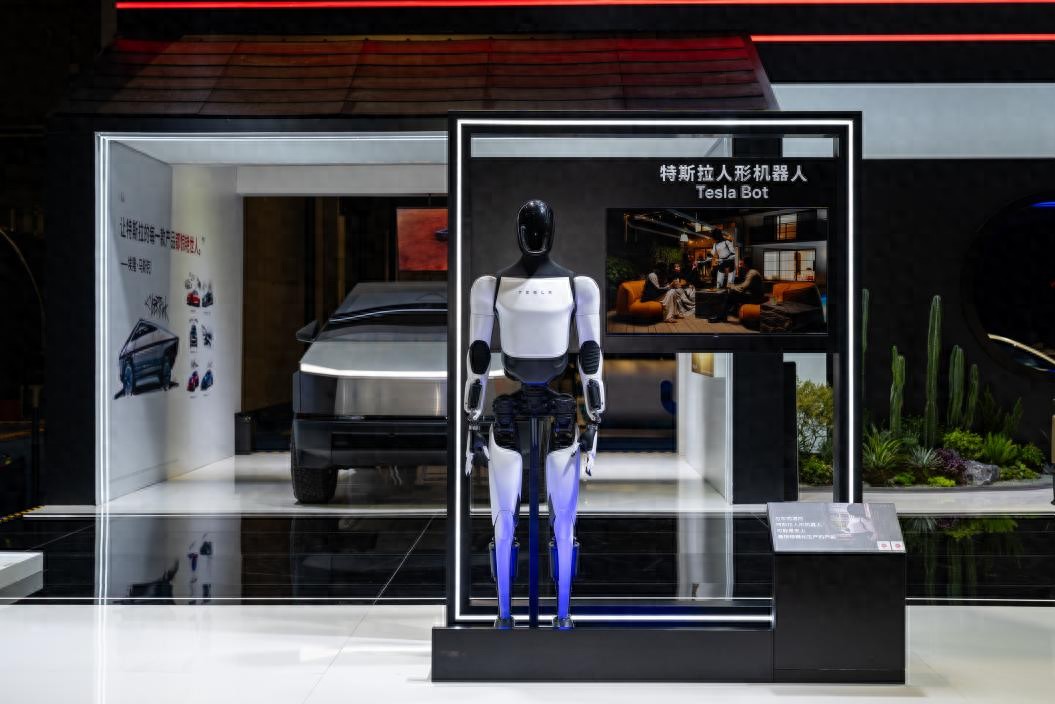
AI technology has become a hot topic at recent exhibitions. As a leader in real-world AI, Tesla’s latest products and technological achievements have sparked discussions and expectations about the practical applications of AI technology.
On January 21, 2026, Tesla updated its mission to “build a prosperous world.” CEO Elon Musk emphasized that the large-scale advancement of autonomous driving and the development of Tesla Robotaxi will fundamentally change the nature of transportation. Meanwhile, humanoid robots could free humans from tedious and repetitive labor, further achieving prosperity for society.
These products are based on Tesla’s AI technology and ecosystem. As Tesla expands its business areas and continually improves its product technology, it is rapidly evolving into a comprehensive tech company encompassing autonomous driving, humanoid robots, electric vehicles, and sustainable energy.
At this year’s Digital Summit, attendees can closely view Tesla’s humanoid robot, Tesla Bot, and the futuristic Cybertruck, along with familiar models like the Model Y and Model 3, showcasing the technological innovations combining AI and driving.
Tesla has achieved deep empowerment of AI in automotive driving through “pure visual perception + neural networks + massive data training,” with its smart assisted driving accumulating over 10 billion kilometers of mileage. In 2025, the Tesla Robotaxi autonomous ride-hailing service began operations in Austin, Texas, and the Bay Area of California, with the operational vehicles being the Model Y. By the end of 2025, the Tesla Robotaxi in Austin and the Bay Area had accumulated over 2 million kilometers, and in January 2026, Tesla began eliminating safety drivers for its autonomous ride-hailing service in Austin.
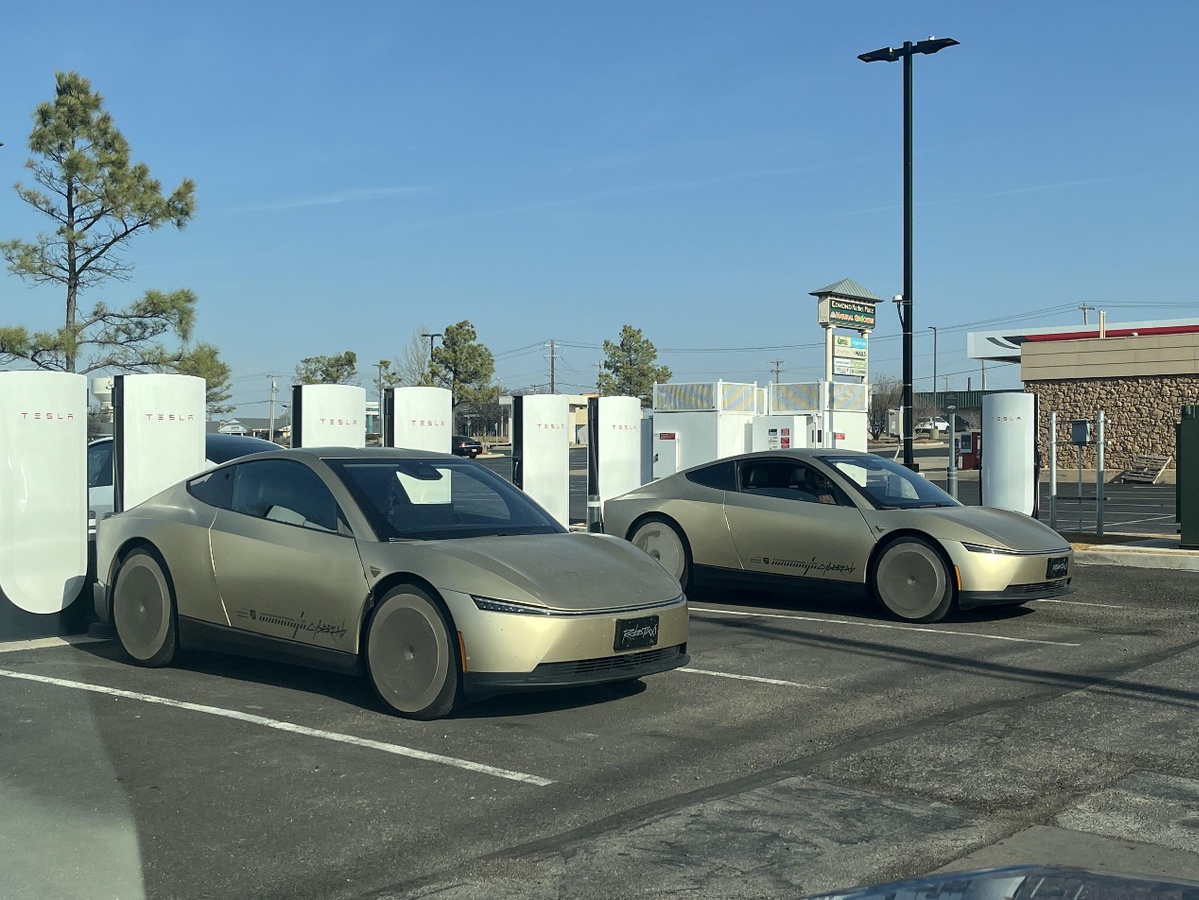
In February 2026, the first mass-produced Tesla Cybercab autonomous electric vehicle rolled off the production line at the Texas Gigafactory. This model innovatively removed the steering wheel and pedals, reconfiguring the interior space specifically for autonomous driving. A small number of Cybercabs have already joined the Tesla Robotaxi fleet for operational testing and have been spotted on the streets of Texas and the San Francisco Bay Area.
Tesla’s humanoid robot, Tesla Bot, shares technology with its electric vehicles, utilizing the same cameras, three-electric technology, and end-to-end neural network technology. This year, Tesla announced the discontinuation of its previous flagship models, the Model S and Model X, to remodel the Fremont factory production line, with plans to start mass production of the third-generation humanoid robot by the end of 2026, aiming for an annual production capacity of 1 million units. This shift underscores Tesla’s commitment to developing its humanoid robot business and its strategic positioning as an AI company. Currently, hundreds of humanoid robots are deployed in Tesla factories, learning human production and living skills.
Additionally, Tesla plans to showcase several energy products at the exhibition, including the latest V4 supercharging stations. In March, Tesla’s V4 supercharging station project officially launched in Chongqing, with the first batch of 55 supercharging stations coming online. This project represents the largest number of supercharging stations built at a highway service area in China.
Attendees can also learn about Tesla’s energy storage products, including Megapack, Powerwall, and Megablock. In 2024, Tesla established its first energy storage super factory outside the US in China, officially commencing production in 2025, with “Made in China” products being sold overseas. In 2025, Tesla’s energy storage products achieved an annual installation capacity of 46.7 GWh, a year-on-year increase of 48.7%. The fourth quarter saw an installation capacity of 14.2 GWh, a quarter-on-quarter increase of 13%, with both quarterly and annual installation capacities reaching record highs.
Notably, Tesla’s energy business is closely linked to AI, serving not only as a major consumer of electricity but also as an important application area. Its energy systems are not merely a collection of hardware but an intelligent network deeply empowered by AI. For instance, its Autobidder trading platform uses machine learning algorithms to analyze market data in real-time, making optimal charging, discharging, and trading decisions to maximize asset value. Similarly, the scheduling of virtual power plants relies on complex AI algorithms to coordinate thousands of decentralized energy storage units.
In the era of AI, the most scarce resources are electricity and chips. On March 20, Musk announced the launch of the largest chip manufacturing project in human history—TERAFAB, aiming to achieve over 1 terawatt of computing power output annually. This facility will integrate the entire process of chip design, lithography, manufacturing, advanced packaging, and testing. Some of the chips produced will directly drive Tesla’s electric vehicles and humanoid robots.
Musk stated that with the development of AI and robotics, the future will achieve “high income for all humanity, extraordinary prosperity,” rather than just “basic income.” In Tesla’s view, achieving a “prosperous society” relies on AI technology to significantly reduce costs and improve efficiency across various industries. The three key industries Tesla is involved in—transportation, energy, and robotics—demonstrate this: with autonomous driving technology, Tesla Robotaxi can offer lower per-kilometer travel costs than public transportation; solar power generation and energy storage devices paired with AI electricity dispatch software can provide low-cost, low-carbon, and highly efficient energy utilization; humanoid robots can provide reliable labor at low costs for extended periods, replacing humans in heavy and dangerous jobs while making high-cost services like surgeries accessible to a broader population.
Comments
Discussion is powered by Giscus (GitHub Discussions). Add
repo,repoID,category, andcategoryIDunder[params.comments.giscus]inhugo.tomlusing the values from the Giscus setup tool.