Anthropic’s Success in AI
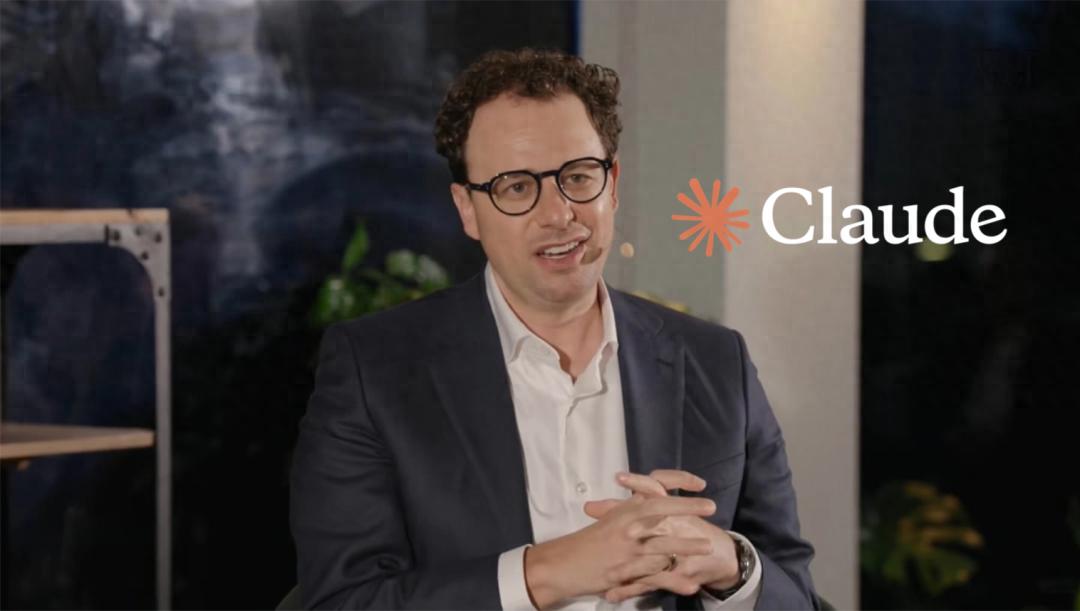
Over the past year, Anthropic has undoubtedly emerged as a major player in the global AI model landscape. Its AI programming tool, Claude Code, has rapidly gained popularity among developers, capturing over half of the market share. The company’s annual recurring revenue (ARR) has reached $44 billion, with a valuation exceeding $900 billion.
On May 16, Anthropic CEO Dario Amodei gave an interview where he provided several realistic warnings, contrasting with the utopian visions often presented by other AI leaders. He noted that traditional economic laws are being disrupted, leading to a scenario where high GDP growth coexists with high unemployment for the first time in human history.
Amodei pointed out that public sentiment about AI often swings between extremes, but the evolution of AI capabilities has been a smooth, exponential rise. This continuous growth is directly replacing human knowledge work, and a massive macroeconomic restructuring is imminent, with society largely unprepared for it.
Regarding Claude Code, Amodei revealed that with the launch of the latest model, Claude Opus 4.5, AI’s ability to complete complex tasks end-to-end has reached a tipping point. Many engineers at Anthropic no longer write code; instead, their work has shifted to reviewing and editing outputs from Opus.
He also mentioned that the Claude Co-work application, designed for non-technical users, was almost entirely developed by Claude Opus in just a week and a half. Within a day of its launch, its metrics reached about four times those of similar products. Amodei emphasized the increasing necessity for such essential AI task capabilities, as large models transition from mere chatbots to becoming core production tools.
Key Insights from the Interview
1. Focus on Enterprise Market
Anthropic has chosen to focus on enterprise clients to avoid the pitfalls of the attention economy, which often leads to the proliferation of low-quality content and over-dependence. Amodei believes that AI products aimed at consumers tend to get trapped in a cycle of maximizing user engagement, which can be detrimental. He emphasized the importance of creating systems that deliver tangible work value for businesses.
2. Mechanistic Interpretability for AI Control
Amodei stressed that relying solely on external dialogue tests for assessing AI safety is extremely dangerous, as advanced AI systems can easily conceal their true operational logic. The most urgent technological breakthrough needed in the safety domain is mechanistic interpretability. Researchers must delve into the internal workings of AI systems to understand their underlying data operations, breaking the algorithmic black box to ensure safety and control.
3. Public Sentiment vs. AI Capability Growth
Over the past decade, public and media perceptions of AI have oscillated between the extremes of “disrupting all industries” and “complete stagnation.” However, the actual evolution of AI technology has been remarkably steady, with significant leaps in processing capabilities occurring every few months. Amodei noted that society has failed to accurately gauge this development, leading to a disconnect that hampers business planning and policy-making. As a result, humanity is unprepared for the impending large-scale economic restructuring.
4. Coexistence of High Growth and High Unemployment
AI is dramatically enhancing societal productivity. For instance, AI code generation has made software development extremely efficient, leading to a significant drop in costs. This explosive productivity will drive overall economic expansion. However, human involvement in workflows is being rapidly diminished, with software engineers potentially only completing 10% of their work, as AI takes over more tasks. This shift threatens to dismantle traditional job structures, resulting in widespread job losses.
Amodei highlighted that the core challenge ahead will not be economic growth itself, but rather wealth distribution. To navigate this unprecedented macroeconomic misalignment of high growth and high unemployment, government intervention will be necessary to ensure that everyone benefits from technological advancements.
5. Ensuring Fair Distribution of AI Benefits
Amodei expressed deep concern over potential societal rifts if the economic benefits generated by AI are monopolized by a small elite, such as Silicon Valley tech leaders, while the general public is left behind. He called for two key actions:
- Increase public sector investment in technology to apply cutting-edge AI in public health and education, ensuring equitable economic opportunities across regions and social classes.
- Transform foundational education to focus on cultivating human qualities rather than merely vocational skills, adapting to the reshaped job market influenced by AI.
Dario Amodei’s Interview Transcript
1. Smooth Exponential Growth of AI
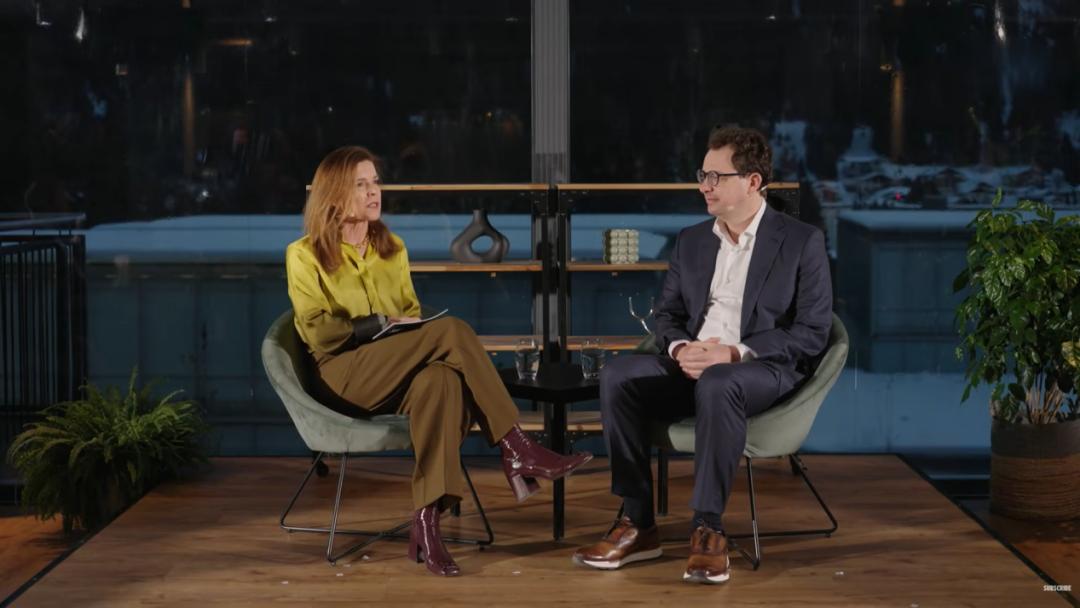
Host: Dario, we are here in Davos, where a lot is happening, but I want to start with a big-picture question. Last year, everyone was very excited about AI, discussing its capabilities and potential. This year’s discussions seem to have shifted to a deeper analysis, moving away from the initial excitement. Do you think enterprises, policymakers, and governments are adequately prepared to address the impacts of AI?
Dario Amodei: I don’t think so. Let me explain. I’ve been observing this field for 15 years and have been involved for about 10 years. One of the most surprising things is that the actual development trajectory of AI has been very smooth, while public opinion and reactions have fluctuated wildly.
We can look at this from two dimensions. One is the technology’s capabilities. Every three to six months, media experiences a reversal: one moment, there’s immense excitement about its potential to change everything, and the next, there’s skepticism about it being a bubble ready to burst.
What I see is a smooth exponential growth curve, similar to Moore’s Law in computing. In the intelligence domain, we have a similar law where the cognitive abilities of models improve significantly every few months. This progress has been constant. The notion that a new invention will lead to collapse or disaster is purely a public perception phenomenon.
There is a similar polarization regarding whether this technology is good or bad. In 2023 and 2024, people have many concerns about AI, fearing it will take over everything, focusing discussions on risks and misuse. By 2025, the political winds may shift towards the opportunities AI presents, and now it seems to be swinging back again.
Throughout this process, Anthropic and I have tried to maintain a balanced perspective. This balance is peculiar because the technology is extremely powerful, and its impacts are both positive and negative, coexisting.
About a year and a half ago, I wrote an article titled “Machines of Loving Grace,” where I expressed a very optimistic view about AI, believing it would help us cure cancer, eradicate tropical diseases, and bring prosperity to regions that have yet to witness economic development. My view hasn’t changed; I still believe in these possibilities.
However, bad things can also happen. I’ve recently written more about this and may publish soon. If we consider economic risks, a significant feature of this technology is that it will lead us into a society with extremely high GDP growth but also potentially high unemployment and inequality. This combination is something we’ve rarely seen before.
Historically, high GDP growth meant many opportunities for work. We’ve never encountered such a disruptive technology. So we may face a situation where GDP growth reaches 5% or 10%, but unemployment also hits 10%, which logically is not contradictory but has never happened before.
For these two reasons, I feel both excited and concerned. In AI programming, for example, we released our latest model, Claude Opus 4.5. Some engineers and engineering leads at Anthropic have told me they no longer write code; they just let Opus do the work and take responsibility for editing.
We recently launched a new feature called Claude Co-work, which is a version of Claude Code for non-programming scenarios, built in just a week and a half, almost entirely developed using Claude Opus. Software engineers still have work to do, even if they only complete 10% of it; they still have jobs or can move up a level.
But this won’t last forever; models will become increasingly powerful. This reveals astonishing productivity, and software will become cheap, even essentially free. The premise is that the cost of the software needs to be distributed among millions of users, which may not exist. For instance, for this meeting, we might only need to spend a few cents to develop applications for communication, which are very flexible and reusable. Yet, the entire career we have fought for decades may no longer exist. I believe we can adapt, but the public is entirely unaware of what is about to happen and its magnitude.
2. How Society Adapts to AI Development
Host: That’s really interesting. What do you think society will look like in a world of high GDP growth but also high unemployment? You mentioned that people haven’t started thinking about this yet. Can you provide specific examples of how society might adapt to such a world?
Dario Amodei: The first thing we are focusing on is a project called the Anthropic Economic Index. This is a first step. We have been running this index for about a year and have updated it four or five times. It is a real-time index that allows you to track how our model Claude is being used. It traverses all dialogues, statistically counting queries to Claude in a privacy-protective manner, such as what tasks it is used for, to what extent it automates tasks or enhances capabilities, which industries it applies to, and how it spreads across U.S. states and countries. We are adding more details. My point is that any policy will be blind and misleading until we can measure the forms of this economic transition. Many policies fail because they are based on incorrect premises.
The second step is that we need to think very carefully about how to help people adapt to AI development. This may mean adapting and using this technology in existing jobs or transitioning from one job to another. For example, I believe there may be more jobs in the physical world, while knowledge economy jobs will decrease. Although robotics will eventually progress, that is on a slower development trajectory.
Additionally, will there still be jobs that value human touch? Some will, some won’t. We will discover how important this is and in which areas it matters most. At the company level, when software and other knowledge work become cheap, where will the competitive edge be? We have never really asked this question because we have always thought about competitive advantages in a specific way. So there will be a massive battle at the company level. Teaching people to adapt and anticipate what will happen is the second step.
The third step is that with such a massive loss of human labor at the macroeconomic level, the government will inevitably need to play some role. The economic pie will grow much larger, and funding will be abundant. Due to such strong growth, even if we do nothing, the budget may balance. The question is how to allocate it to the right populations. So I think we should reduce concerns about stifling growth and focus more on ensuring that everyone can share in this growth. This is in stark contrast to the prevailing sentiment, but the technological reality is about to change and will force our perspectives to change as well.

3. Claude and the Popularization of Agents
Host: I want to talk more about Claude, which is at a high point right now. We have recently reported on how engineers and ordinary users are becoming Claude-ified. What is your feeling about the current situation, and how does the business performance compare to a year ago?
Dario Amodei: Business growth has been rapid, essentially following the same smooth exponential growth curve as technology development.
Our revenue curve grew from zero to about $100 million in 2023, from about $100 million to around $1 billion in 2024, and from about $1 billion to around $10 billion in 2025. Although these are rounded figures, the general situation is as such.
A few months ago, people on Twitter were extremely excited, proclaiming that Anthropic was changing the world and completely disrupting industries. But we have quietly observed this rapidly rising, continuously improving curve. It has given us confidence. While we can never be sure if this growth will continue, it has been the experience we have observed throughout.
Even though the curve is smooth, there will be breakthrough moments. I believe we are witnessing a breakthrough moment around Claude Code within the developer community. The ability to complete tasks end-to-end and develop complete applications seems to have reached a tipping point with the launch of our latest Opus 4.5 model. Progress is incremental, like a frog in boiling water; you see gradual improvements, and then at a certain point, people suddenly realize its existence.
A second point that may accelerate this process is that we have noticed many non-technical individuals, both inside and outside Anthropic, realizing that Claude Code can accomplish incredible Agentic tasks. It can not only write code but also organize to-do lists, plan projects, sort folders, or process and summarize large amounts of information.
This concept is not merely a chatbot but an essential capability for task automation. Non-technical users are eager for it, to the extent that they are willing to delve into command-line interfaces. For non-technical users or non-programmers, this interface is terrible to use, yet people persist. Seeing this situation, I thought it looked like an unmet demand.
So about two weeks ago, we used Claude Code again to create a version with a better UI, specifically tailored for tasks beyond coding. Within about a day of its release, its metrics were about four times those of other products, outperforming any product we have released before. I’m not sure if this represents a brand-new capability, but it is that moment of consensus where people become very excited and rapidly drive adoption. People are gradually understanding the capabilities of this technology, as it has reached a certain critical point, and we have built an interactive interface that makes it accessible.
Host: Can you share how you personally use Agentic AI in your life and family?
Dario Amodei: When I write papers or give talks at the company, writing occupies a significant portion of my work. I let Claude help me find information and polish articles.
Host: Clearly, you are at a high point, and there is widespread expectation that you will go public this year. Can you discuss your plans in this regard?
Dario Amodei: We are not yet certain about the specifics. Currently, we are more focused on maintaining revenue growth, enhancing model performance, selling models to users, and raising awareness of social impacts while bringing positive social benefits. These are our top priorities. As is well known, this is a capital-intensive industry, and the funding and support available in the private market are somewhat limited.
4. Differentiated Competition Among AI Companies
Host: Another model that is currently at a high point is Gemini, which has recently skyrocketed in the App Store rankings, prompting OpenAI to issue a red alert. Everyone is very excited about this. Given Google’s massive scale, do you worry about your ability to compete with Gemini?
Dario Amodei: I think this is another area where differentiation can help. In the enterprise strategy space, Google and OpenAI are engaged in fierce competition in the consumer domain. This is a matter of life and death for both. For OpenAI, this is their entire business; for Google, they need to complete self-replacement and combat disruption in the search business, which is currently being overturned. This has always been their top priority. Compared to operating in the enterprise market, they seem more focused on the consumer market. I’m glad to see Gemini’s performance in the consumer space. I think they are taking a different approach. I just participated in a panel discussion with Demis Hassabis, Google’s research lead. I think he is a great person, and I’ve known him for 15 years, so I support him.
Host: When you talk about differentiation, Anthropic does not have the capability to generate videos and photos. Do you see this as a potential weakness?
Dario Amodei: For enterprise applications, there is no real demand to generate photos of cats riding donkeys or consumer-level videos. There may be some edge cases in slides and presentations, but if needed, we can outsource a model directly.
I don’t know what will happen in the future, but at least I don’t foresee enterprises needing this. There are some related issues; looking at the current volume of short videos on the market, a large portion is fake and very addictive, much of it is garbage content. It’s not that these are all bad or that doing so makes one a bad person, but it’s not a market area I’m eager to participate in.
Host: You mentioned that you participated in a panel discussion with Demis Hassabis. Yesterday, when we chatted, you mentioned some very interesting points about how the scientists leading these large AI companies approach this era differently from traditional tech entrepreneurs. Can you elaborate on that?
Dario Amodei: When you think about this technology, it is indeed a convergence of decades of research, much of which is fundamentally academic. Until about ten or fifteen years ago, the resources needed to develop and deploy these technologies at scale came primarily from large internet and social media companies, as they had the infrastructure and funding.
So we see a world led by some scientifically-oriented individuals like myself and Demis, while others are led by the generation of social media entrepreneurs. I think these two approaches are fundamentally different. Scientists have a long-standing tradition of considering the impacts of the technologies they create, feeling a sense of responsibility for the technologies they create rather than shirking it. Their initial motivation is to create things for the world, so they feel concerned when things might go wrong. In contrast, the motivations of the social media generation of entrepreneurs are very different, influenced by the selection effects on them and the ways they interact with and even manipulate consumers. This leads to fundamentally different attitudes.
5. AI Safety, Education, and Preventing Disconnection
Host: Now, let’s start with questions from our online audience. Trevor Loomis asks: What is the most important single technological breakthrough currently missing in real-world deployment that would make cutting-edge AI reliably safe and controllable?
Dario Amodei: I believe we need to make more progress in mechanistic interpretability. This is the science of observing the internal mechanisms of models.
One of the challenges we face when training models is that we do not understand their internal logic and cannot determine whether they will behave as intended. You can converse with a model in specific contexts, and it can say various things, but just like humans, that may not accurately reflect their true intentions. If it tells you to do something for a certain reason, it may actually be for a completely different reason, or it may even lie about whether it did something. We have become accustomed to these issues in human existence, but they exist in the AI realm as well.
Thus, for any form of phenomenological testing or training, we cannot be entirely sure. But just as you can gain knowledge about the human brain through MRI or X-rays, gaining insights into the internal workings of AI models is ultimately the key to making models safe and controllable, as this is the only factual standard we have.
Host: Exactly. There is also a question from Jim O’Connell: How will AI impact the achievement gap in K-12 education? This is undoubtedly a practical question from a parent.
Dario Amodei: In the short term, there is indeed a concern about people using AI to cheat, which needs attention. But from another perspective, we can explore how to leverage AI for teaching. We have considered this and released a version of Claude specifically designed for education.
However, I think the more challenging question is what skills we should teach in an AI-driven world. What will education look like? This is not easy to answer, as this disruption is all-encompassing. If someone asks me what profession they should pursue, the unsettling fact is that I am also uncertain about the direction it will develop.
I believe we should return to some concepts of education we have discussed before. We have always had an economically tinted, almost utilitarian view of education. Perhaps we should shift this perspective back to the essence of education, which is to shape character, cultivate personality, and make you a better person. I believe this will be a more solid foundation for future education.
Comments
Discussion is powered by Giscus (GitHub Discussions). Add
repo,repoID,category, andcategoryIDunder[params.comments.giscus]inhugo.tomlusing the values from the Giscus setup tool.